
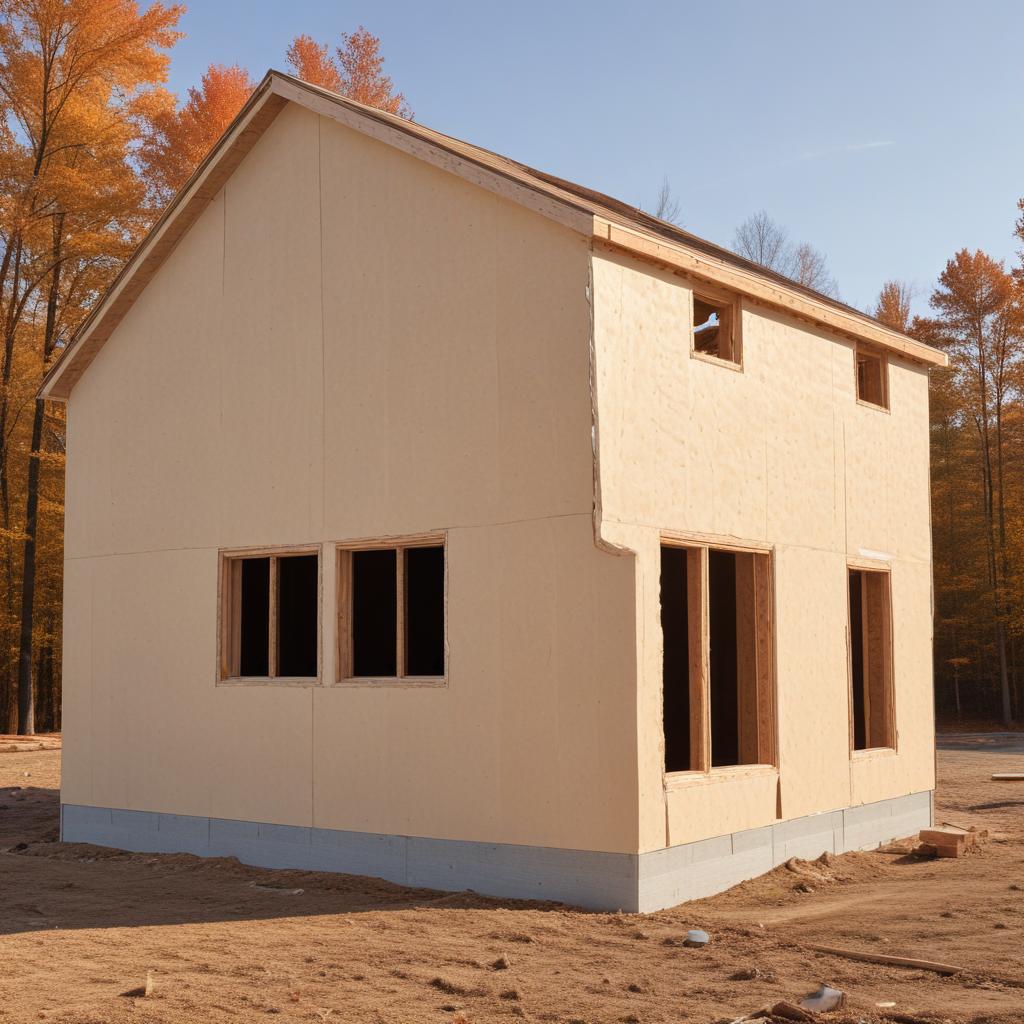
Close the Building Envelope Before Midstate Winter: Insulation, Air Sealing, and Dry-In
Why late September through November matters in the Midstate
Middle Tennessee sits in a mixed-humid climate (IECC Climate Zone 4A for the Nashville metro). That means builders and remodelers fight both heating and cooling loads, plus moisture that can move into wall and roof assemblies from either side of the envelope depending on the season. Closing the building envelope—dry-in, air sealing, and insulation—before Midstate winter is not just a comfort upgrade. It is the practical window when exterior work is still weather-friendly and interior weatherization can finish before heating season peaks.
According to National Weather Service Nashville climate normals, October still averages a mean temperature near 61.7°F, while November drops to about 50.3°F and December to about 42.7°F. The mean date of the first fall freeze (minimum ≤32°F) around Nashville is roughly November 11. In plain jobsite language: late September through early November is still a secondary exterior window for sheathing, weather-resistive barriers, roof underlayment touch-ups, window flashing, and siding-related dry-in. Once freeze nights and wet winter fronts stack up, roofing, paint, and exterior finish slow—while insulation, air sealing, HVAC trim-out, and interior remodel work continue under a closed roof.
This post is about finishing the thermal and air barrier and the dry-in materials that protect it. It is not a lead-time or price-window staging guide, and it is not about surplus yard grade stamps. Call Music City Building Supply for current availability on insulation, housewrap, underlayment, sealants, and related finish materials rather than assuming stock from any article.
What “closing the envelope” actually means on a Mid TN job
The building envelope is the continuous boundary that separates conditioned space from outdoors (and often from unconditioned attics, crawlspaces, and garages). Closing it before winter usually means four coordinated layers:
- Bulk water control — roof underlayment, flashing, and a continuous water-resistive barrier (WRB) so rain does not reach sheathing.
- Air control — sealed top plates, penetrations, rim joists, attic bypasses, and window/door rough openings so conditioned air is not leaking into cold cavities.
- Thermal control — insulation installed to the correct depth and contact (no gaps, compressions, or missing corners) after major air leaks are addressed.
- Vapor management — climate-appropriate facing and drying paths so winter heating and summer humidity do not trap moisture in wood assemblies.
EPA’s ENERGY STAR program notes that air leaking through walls, windows, doors, and other openings wastes energy, and that sealing plus adding insulation in attics, floors over crawl spaces, and basements can cut heating and cooling costs by about 15% on average for many homes (about 11% of total energy costs). ENERGY STAR also highlights that air sealing and insulation work best together—and that attic air sealing should generally be completed before attic insulation so you are not burying the leaks you still need to reach.
Sequence that saves callbacks: dry-in → air seal → insulate
1) Finish dry-in while exterior weather still cooperates
APA – The Engineered Wood Association emphasizes that moisture is one of the most damaging threats to building performance, and that engineered wood performs well when the envelope is detailed correctly. Key APA moisture-mitigation points that matter on Midstate fall jobs:
- Keep a continuous WRB (housewrap or building paper) as a drainage plane behind cladding, with proper shingle-laps, sealed seams, and integration with flashing at windows, doors, corners, and penetrations.
- Detail flashing so water always drains out and down, never into the cavity.
- Treat roof underlayment as a system with sheathing, flashing, and ventilation—most leaks show up at intersections and penetrations, not in open field areas.
- Remember wood risk thresholds: moisture content above roughly 19% raises decay risk; mold becomes a concern as moisture climbs past about 20%.
Practical late-fall dry-in checklist for builders and remodelers:
- Confirm roof dry-in (underlayment, ice/water where specified by code or manufacturer, chimney and curb flashing) before leaving a house open through a wet week.
- Complete WRB at corners, ledger lines, and window/door heads before cladding or temporary cover decisions.
- Seal or tape WRB penetrations for dryer vents, hose bibs, and electrical as you go—not as punch-list leftovers in January.
- Protect staged plywood, OSB, and insulation from ground moisture and overnight dew; cover and elevate materials on site.
Music City Building Supply stocks builder categories that support this phase—including lumber and plywood/OSB, roofing underlayment and related roofing materials, siding-related weather barriers, doors and windows, and trim. Confirm what is on the yard when you are ready to pick up or schedule delivery.
2) Air seal the big holes before insulation day
ENERGY STAR’s attic air-sealing guidance is blunt: plug the large holes first. Dirty or discolored insulation is often a clue that air has been moving through that path. Common attic and envelope bypasses on Mid TN houses include:
- Open top plates and wall-to-attic intersections
- Dropped soffits over kitchens and baths
- Kneewall cavities in finished attic rooms
- Plumbing and wiring penetrations
- Recessed light cans (use airtight rated products or proper sealing methods)
- Furnace/water-heater flue and duct chases (use code-clearance metal dams and high-temperature sealants—not ordinary foam against hot flues)
- Attic hatches and pull-down stairs
- Rim joists and band joists at floors over crawlspaces or garages
DOE’s consumer air-sealing guidance frames the same idea for the whole house: find and seal gaps around windows and doors, electrical and plumbing penetrations, and other envelope leaks; use caulk for small cracks, weatherstripping at operable joints, and appropriate foam or rigid blocking for larger openings—and bring in a professional when combustion appliances, radon, or complex attic conditions are in play.
Before you tighten a house that has gas or oil appliances, plan for combustion safety. ENERGY STAR warns that sealing can change how naturally venting equipment drafts. Many Midstate remodelers wisely schedule a qualified HVAC or home-performance check when they are doing whole-house air sealing plus insulation upgrades.
3) Install insulation to contact and depth—not “stuffed somewhere in the bay”
Once major air leaks are closed, insulation can do its job. In Climate Zone 4A, cavity insulation in walls, attics, and floors is a code and performance conversation with your designer or energy rater—but installation quality is non-negotiable on every job:
- Batts should fill the cavity edge-to-edge with no compression behind wiring or plumbing when avoidable.
- Maintain continuous coverage at attic edges and raised-heel trusses where the design allows.
- Do not bury recessed lights unless they are insulation-contact (IC) and airtight-rated for the assembly.
- In crawlspaces and floors over unconditioned space, stop air washing under the floor before arguing about R-value stickers.
For remodelers opening walls this fall, treat every opened bay as a chance to correct missing insulation and seal plate lines you cannot reach later. Interior remodel seasons in Nashville often accelerate after exterior work slows—so the crews that air-seal and insulate while cavities are open avoid winter callbacks about cold rooms and high bills.
Moisture and vapor strategy for mixed-humid Tennessee
Mixed-humid Zone 4A is not a “poly on the warm side of everything” climate. Guidance from the Insulation Institute (NAIMA) and current IRC vapor-retarder classes matters here:
- The IRC does not require a Class I vapor retarder in Climate Zones 1–4 (except Marine 4).
- NAIMA recommends Class II or III approaches in these warmer zones and generally avoiding Class I (very low-perm) sheets on the interior of typical frame walls, because summer inward vapor drive plus air conditioning can trap moisture.
- Kraft-faced batts (often Class II) remain a common, climate-compatible choice when installed per manufacturer and code.
- APA reminds teams that vapor control and air sealing are related but not identical: stopping air leakage is a primary moisture strategy, while vapor retarders manage diffusion.
In practice for Midstate fall weatherization:
- Prefer assemblies that can dry at least one direction.
- Do not create accidental double vapor barriers (for example, low-perm exterior foam or WRB combinations plus interior poly) without a designed assembly.
- Fix bulk water and air leaks first; vapor paper cannot rescue a flashing miss.
- Keep crawlspace ground moisture and attic ventilation in the plan when you tighten the house.
Builder and remodeler work plan for the late Sept–Nov window
Use this as a field sequencing guide, not a substitute for code, manufacturer instructions, or your AHJ:
- Walk the envelope — roof, WRB, window flashing, penetrations, attic, crawlspace, and garage interfaces.
- Finish exterior dry-in while daytime highs still support membranes, sealants, and crew productivity.
- Air seal attic bypasses and rim joists before insulation trucks arrive.
- Insulate to design R-values with Grade I installation intent (full contact, no major voids).
- Verify HVAC and combustion appliance performance after major sealing.
- Close interior remodel scopes (drywall, trim, cabinets, flooring) under a stable temperature and humidity path.
Materials conversations that often come up at Music City Building Supply during this window include roofing underlayment and related dry-in products, housewrap and flashing accessories, rigid and batt insulation options available that week, sealants and foam for penetrations, plywood/OSB for sheathing repairs, and doors/windows when rough openings are part of the weatherization scope. Because MCBS is a surplus and wholesale builder-run yard serving the Midstate from Columbia, TN, availability moves—call for what is on hand rather than planning from a blog list.
Soft call to action for Midstate crews
If you are racing a late-fall dry-in or lining up insulation and air-sealing materials for a Columbia-to-Nashville-area project, talk to the Music City Building Supply team about current inventory. We are a surplus/wholesale, builder-run supplier at 1230 Industrial Park Road, Columbia, TN 38401, phone 615-385-7777, open Monday–Friday 9AM–4PM and Saturday 9AM–2PM. Ask what is available now for weather barriers, insulation, roofing underlayment, lumber and panels, doors, windows, and related finish materials—then lock your envelope sequence before Midstate winter slows the exterior side of the schedule.
Sources
- ENERGY STAR, “Why Seal and Insulate?” — https://www.energystar.gov/saveathome/seal_insulate/why-seal-and-insulate (accessed Sep 28, 2026 CDT)
- ENERGY STAR, “Attic Air Sealing Project” — https://www.energystar.gov/saveathome/seal_insulate/attic-air-sealing-project (accessed Sep 28, 2026 CDT)
- U.S. Department of Energy, “Consumer Guide to Air Sealing the Home” (PDF) — https://www.energy.gov/sites/default/files/2021-08/ES-Air%20Sealing_080421.pdf (accessed Sep 28, 2026 CDT)
- APA – The Engineered Wood Association, “Moisture Mitigation” — https://www.apawood.org/applications-systems/design-guidance/moisture-mitigation/ (accessed Sep 28, 2026 CDT)
- Insulation Institute (NAIMA), “Moisture Control: Utilizing Vapor Retarders” — https://insulationinstitute.org/im-a-building-or-facility-professional/residential/installation-guidance-2/moisture-management/vapor-retarders/ (accessed Sep 28, 2026 CDT)
- National Weather Service Nashville (OHX), “Nashville Climate Records” (normals and first freeze timing) — https://www.weather.gov/ohx/bnaclimate (accessed Sep 28, 2026 CDT)
- Music City Building Supply public site facts (address, phone, hours, Midstate surplus/wholesale builder supply) — https://musiccitybuildingsupply.com (accessed Sep 28, 2026 CDT; public contact facts as provided for this publish)
Need materials for your next project?
We'll source it and get you a fast, no-obligation quote.